
Calendula

This plant, commonly known as the Marigold, is an annual plant with yellow flowers. It is often used in dyes or for colouring, owing to its carotene content. This plant also possesses significant benefits due to the amounts of flavonoids and triterpenoids it contains.
Flavonoids are molecules very rich in antioxidants and enzyme inhibitors. These elements play a significant role on the skin.
First of all, let's describe antioxidants. These are chemical molecules that help fight free radicals.
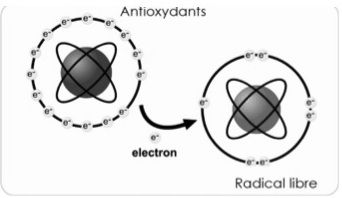
Diagram of the mechanism of an antioxidant giving an electron to a free radical
Free radicals are atoms that are missing or have an extra electron. Unstable, these atoms will try to recover or eliminate this electron to regain their balance. They are natural anomalies and do not cause problems when they are in moderate quantities. On the other hand, as soon as they are in large quantities, they disrupt chemical balance, thereby causing, for example, skin aging.
The antioxidant will then help maintain the balance by either donating or accepting an electron to/from the free radical.
Why is this important for the skin? Because at the skin level, free radicals capture or donate an electron to the cell membranes, affecting the collagen. Collagen, as we know, is part of several processes that play an important role in the skin's firmness, resistance, and hydration. As soon as collagen is degraded, the skin loosens and wrinkles appear. This is not the only cause of wrinkles, but it is a significant one.
It is important to note that the production of free radicals is accelerated by pollution of all kinds or by prolonged exposure to the sun. Protecting oneself, both internally and externally with creams, helps to limit this damage. For example, Day Beauty: an application, every morning, helps to protect the face and neck from external aggressions.
Another important molecule in the skin to protect is elastin. It is a structural fibrous protein in the skin. As its name suggests, elastin allows for skin elasticity by linking cells together and helping to form biological tissues. Thanks to this, the skin adapts to all movements and shocks; this fibrous protein tends to return to its shape each time. Without it, the skin is harder and can easily deteriorate. This molecule is difficult to break down and is very resistant. However, it does degrade with time. Elastin production stops at puberty. But thanks to its stability, elastin remains intact throughout life. Unfortunately, like all molecules, it can be altered, degraded by a particular enzyme. In its case, this is elastase.
Elastase is an enzyme naturally present in the body; its quantity increases over time and its release is favoured by inflammatory reactions.
Sage helps to fight elastase through its flavonoids, which are composed of enzyme inhibitors. In other words, they prevent the enzymes specific to their code from acting.
So, to conclude, flavonoids play a crucial role in skin health. They help the skin maintain its integrity over time, both structurally and physically.
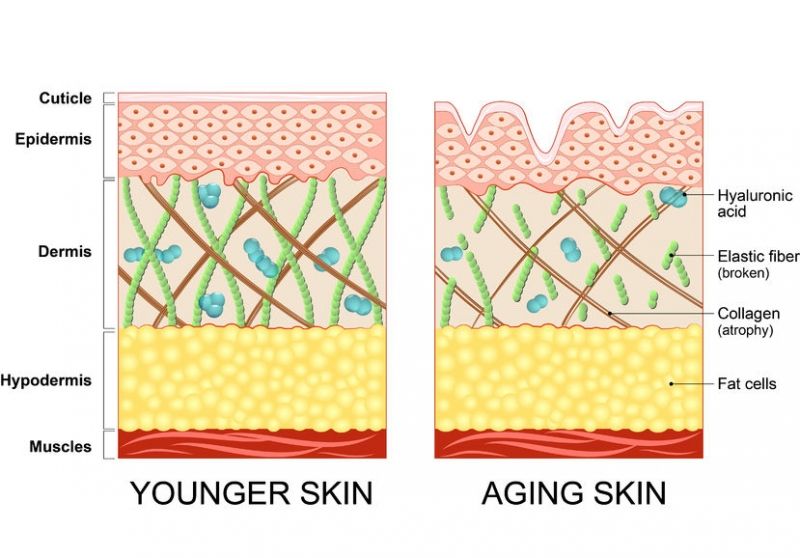
Diagram of skin ageing (decrease in collagen and elastin)
Calendula officinalis also contains important elements known as triterpenoids. These are organic compounds often used for their aromatic qualities, but they have also long been known and used by herbalists for their anti-inflammatory and anti-oedematous properties.
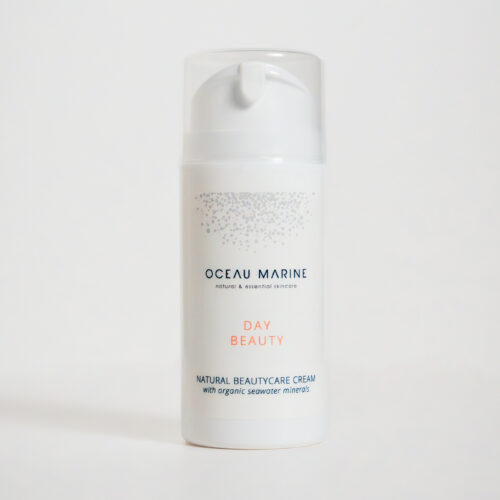
Day Beauty is a natural day cream with plasma...